
Typical lifespans with proper installation and maintenance, as we quote them on our TPO, flat roof and metal roofing pages. Actual life depends most on maintenance.
The main commercial roofing types are single-ply membranes (TPO and EPDM), modified bitumen, built-up roofing (BUR) and metal panel systems. On a Central Florida office, retail center or warehouse, the choice usually comes down to TPO for a low-slope roof at a moderate budget, metal for a long-hold building, and modified bitumen or BUR where a multi-ply asphalt roof suits the building. Each trades off cost, lifespan, weight and how it handles heat, foot traffic and standing water.
This guide compares them side by side for property owners and facility managers. When you want a recommendation for your own building, our commercial roofing team gives free estimates with a detailed written scope, materials specifications and itemized pricing.
In this guide
- What counts as a commercial roof?
- Commercial roofing types at a glance
- TPO single-ply membrane
- EPDM rubber
- Modified bitumen
- Built-up roofing (BUR)
- Commercial metal roofing
- What Florida changes about the choice
- How to choose for your building
- When to call in Central Florida
- Questions property owners ask
What counts as a commercial roof?
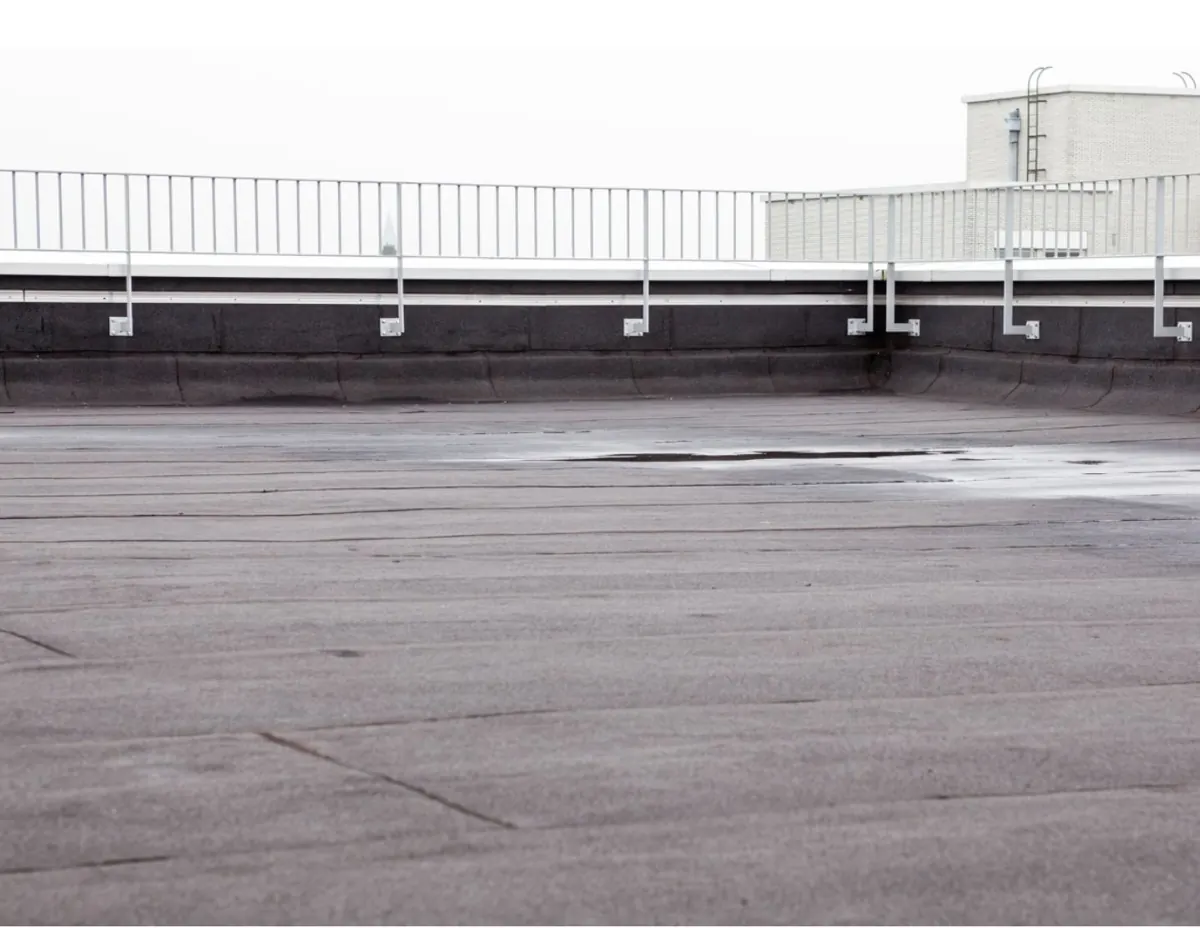
In practice, a commercial roof is the roof on a business property: offices, retail centers, restaurants, warehouses, industrial buildings and multi-tenant buildings. Most are low-slope, which looks flat but is built with a slight pitch toward drains or scuppers. That's the big difference from a house. A low-slope roof can't shed water the way overlapping shingles or tile do, so it needs a continuous waterproof membrane or a panel system with sealed seams.
Some commercial buildings do have steep roofs, and some homes have low-slope sections, such as a porch or an addition. The roofing type follows the slope, not the zoning.
Commercial roofing types at a glance
| Type | What it is | Typical life | Strengths | Watch for |
|---|---|---|---|---|
| TPO | Single-ply thermoplastic sheet, seams heat-welded | 20 to 25 years | Reflective white surface, light weight, efficient to install | Seam and flashing quality decide how it performs |
| EPDM | Single-ply synthetic rubber sheet | Varies by system | Flexible, long track record | Standard black sheet absorbs heat |
| Modified bitumen | Asphalt sheets, torch-down or self-adhered | 20 to 25 years | Tough surface, faster and cleaner than BUR | Seams and blistering need checks |
| BUR | Multiple plies of asphalt and felt | 25 to 30 years | Longest-lasting traditional system | Heavy; messier, slower install |
| Standing-seam metal | Panels with concealed fasteners | 40+ years | Lowest upkeep, UV-resistant coatings | Higher upfront cost |
Lifespans with proper installation and maintenance, from our own commercial flat roof and commercial metal roofing pages. Other systems exist, including PVC membranes, spray foam and fluid-applied coatings; ask any contractor which ones they install and why.
TPO single-ply membrane
TPO (thermoplastic polyolefin) is the modern default for Central Florida commercial flat roofs. It comes in wide sheets that are fastened or adhered over insulation, and the seams are heat-welded into one continuous waterproof surface. The white surface reflects sunlight, which helps lower cooling costs, and the membrane is light enough not to overload most existing structures.
TPO is only as good as its seams and flashing details. The membrane thickness matters too. We install 60 mil and thicker membrane, and a properly installed TPO roof lasts 20 to 25 years here with regular maintenance. Our TPO roofing page covers what goes into an install.
EPDM rubber
EPDM is a synthetic rubber single-ply membrane, usually black. It has been used on commercial roofs for decades, and it stays flexible as it ages. Its weak spot in Florida is heat: a dark membrane absorbs sunlight, while white TPO reflects it. For that reason, TPO is the modern default for most new Florida low-slope work, though EPDM is still a sound choice on some buildings, and many existing roofs are EPDM.
Modified bitumen
Modified bitumen (mod-bit) is asphalt reinforced and modified for flexibility, applied as rolled sheets. It goes down as torch-down or self-adhered sheets. It gives a tough surface that handles foot traffic.
Mod-bit installs faster and cleaner than a traditional built-up roof with similar longevity. Expect about 20 to 25 years with maintenance. Seams and blisters are where it needs watching.
Built-up roofing (BUR)
Built-up roofing is the oldest of the low-slope systems: alternating layers of asphalt and reinforcing felt, often finished with gravel or a cap sheet. Multiple plies give it redundancy. BUR is the longest-lasting traditional flat-roof system, at about 25 to 30 years, but it is heavy and its installation is messier and slower than mod-bit or TPO.
Commercial metal roofing
Metal panel systems are the long-term play. Standing-seam panels hide their fasteners, so there are no exposed screw heads to back out or leak, and high-performance coatings resist UV for decades.
With proper installation they last 40+ years with minimal maintenance. Structural standing-seam systems can go on slopes as low as 1/4 inch per foot with the right details and underlayment. Exposed-fastener panels cost less and suit outbuildings and budget projects, but their washers age in the Florida sun and need more attention.
For owner-occupied buildings and long-hold properties, metal often costs less over 40 years than two TPO replacements plus their maintenance. For a building you expect to sell in five years, the math usually favors a membrane.
What Florida changes about the choice
Heat and reflectivity
Central Florida roofs spend most of the year in strong sun. A reflective, light-colored surface keeps the roof cooler, and the U.S. EPA (page updated June 18, 2026) notes a cool roof can cut peak cooling demand in air-conditioned homes by 11 to 27 percent.
A commercial roof sits under the same sun. For low-slope roofs, the EPA lists single-ply membranes with light or cool pigments, cool-colored coatings and reflective granulated asphalt membranes among the options. That's a big part of why white TPO is so common here.
Afternoon storms and drainage
Summer thunderstorms dump heavy rain fast. On a low-slope roof, blocked drains and ponding water are where trouble starts, and most flat roof leaks trace back to failed seams, clogged drains, worn flashing at walls and curbs, or punctures from foot traffic. Almost all of them are preventable with regular maintenance, which is why we offer quarterly or semi-annual maintenance programs.
Repair limits and recovering
Florida's 25% rule limits how much of a roof section can be repaired in a 12-month period before the section has to meet current code. Florida Statute 553.844 eased that for roofs built to the 2007 Florida Building Code or later. When a roof is replaced, code allows up to two roofing layers in most Florida jurisdictions, so a new membrane can sometimes go over a single existing one, if the old roof isn't holding wet insulation and the structure can carry it.
How to choose for your building
- Know your slope. Truly low-slope roofs need a membrane or a structural metal system rated for that pitch.
- Decide your horizon. Selling or refinancing soon points to a membrane. Holding for decades points toward metal.
- Check what's under the old roof. Wet insulation, deck damage and the number of existing layers decide whether a recover is possible.
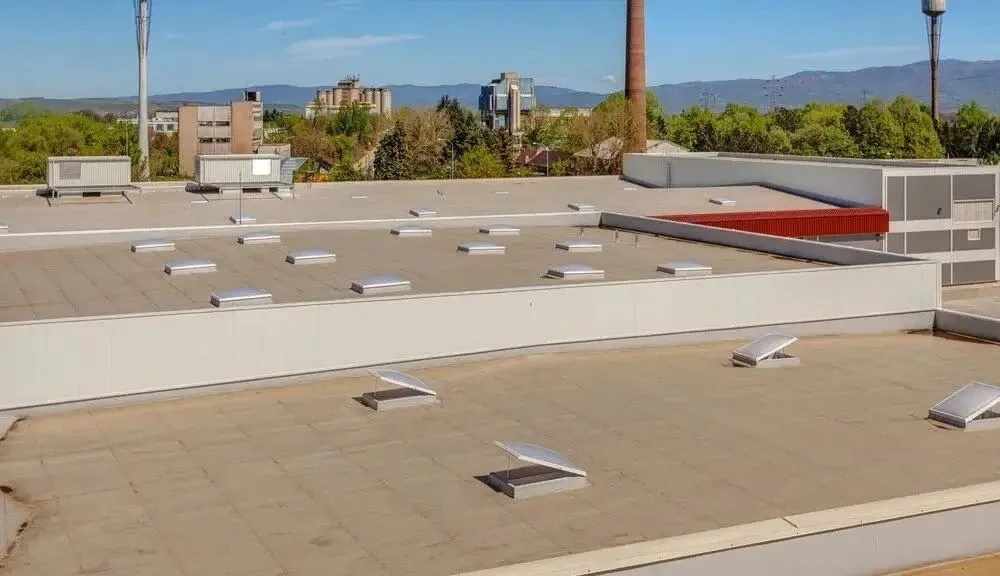
- Count the penetrations. Skylights, HVAC curbs, vents and drains are where most leaks start, so the flashing plan matters as much as the membrane.
- Plan for maintenance. Every system lasts longer with scheduled inspections and drain clearing, and some manufacturer warranties require it.
- Get the scope in writing. Compare system, thickness, insulation, tear-off, flashing details and warranties line by line, not just the total.
When to call for commercial roofing in Central Florida
Call when a flat roof has leaks in several places, ponding that lingers days after rain, blistering or open seams, or when it's nearing the end of its expected life. A commercial roof inspection with photos and a remaining-life estimate tells you how much time is left before you have to budget a replacement.
We work on commercial properties across Seminole, Orange, Volusia and Lake counties, including Orlando, Lake Mary, Heathrow, Maitland, Casselberry and DeBary. Sun State is a Florida State Certified Roofing Contractor (CCC1334700) with full general liability and workers' comp coverage. See our commercial roofing services or request a free commercial estimate.
Questions property owners ask
What are the different types of commercial roofing?
The main types are single-ply membranes (TPO and EPDM), modified bitumen, built-up roofing (BUR) and metal panel systems such as standing seam. PVC membranes, spray foam and fluid-applied coatings are also used on some buildings.
What is the most common commercial roof in Florida?
For low-slope commercial roofs, TPO is the modern default. Its white, heat-welded membrane reflects sunlight, is light enough for most existing structures, and lasts about 20 to 25 years here when it is installed and maintained properly.
Which commercial roofing type lasts the longest?
Metal. A standing-seam commercial metal roof lasts 40+ years with proper installation and minimal maintenance. Among flat-roof membranes, built-up roofing runs about 25 to 30 years, and TPO and modified bitumen about 20 to 25.
Is TPO or metal better for a commercial building?
TPO costs less and installs faster; metal costs more upfront, lasts longer and needs less maintenance. For an owner-occupied or long-hold building, metal often wins over 40 years. For a shorter hold, a membrane usually makes more sense.
Can a new commercial roof go over the old one?
Sometimes. Code allows up to two roofing layers in most Florida jurisdictions, so a new membrane can go over a single existing one in good condition. Wet insulation, deck damage or structural limits mean a tear-off instead.
How often should a commercial roof be inspected?
Quarterly or twice a year is a good rhythm for a low-slope roof, plus a check after major storms. Drain clearing, seam checks and sealant refresh at those visits prevent most flat roof leaks and help keep manufacturer warranties in force.