Owner-builder rules from Florida Statute 489.103(7). Labor share from This Old House's solar cost breakdown, updated June 2026.
DIY solar panel installation in Florida is possible in a narrow sense: the state's owner-builder law lets you act as your own contractor on your own home. In practice, a grid-tied rooftop system still needs a building permit, an inspection and your utility's approval, the electrical tie-in is licensed work, and every mount you put through the roof is a potential leak. Installation labor is also a small part of what a solar system costs, so the savings are smaller than they look.
This guide covers what the law allows, where DIY installs go wrong, and the parts of going solar you really can do yourself. We're a Florida state-certified roofing contractor (CCC1334700) that handles the roofing side of solar projects and repairs leaks around panel mounts, so we see how these jobs turn out years later. When you're ready to compare, our free solar consultation gives you a written estimate to measure DIY against.
In this guide
- Three kinds of "DIY solar"
- What Florida law allows
- The electrical side
- The roof side
- How much DIY really saves
- DIY vs. professional install
- What you can do yourself
- Questions homeowners ask about DIY solar
Three kinds of "DIY solar"
People mean different things by DIY solar, and the rules are very different for each:
- Portable and off-grid kits. A panel that charges a battery pack, an RV, a boat or a shed light, with no connection to your home's wiring. This is the easy kind. A permanent structure-mounted setup may still need a permit, so check with your building department.
- Plug-in panels. A panel plugged into a wall outlet to feed your house. Anything that pushes power into your home's wiring, and through it to the grid, needs a permit and an interconnection agreement with your utility in Florida, so this isn't a shortcut.
- A grid-tied rooftop system. What most homeowners mean: panels on the roof that power the house and send extra to the grid for net metering credit. This is the one the rest of this guide is about.
What Florida law allows
Florida's owner-builder exemption, s. 489.103(7), lets a property owner act as their own contractor on a home they'll occupy. It comes with conditions:
- You personally appear and sign the building permit application, and sign a disclosure statement from the building department before the permit is issued.
- You directly supervise all work not done by licensed contractors. You can't hand that supervision to anyone who isn't licensed for the work.
- The house has to be for your own use. Selling or leasing it within a year of completion creates a presumption the work was done for sale.
- You take on the responsibilities of a contractor for the job, including as an employer if you hire help.
The same statute has a paragraph written for solar specifically. It lets owners install, remove or replace solar panels on one- to three-family homes, but only where the county or city took part in the federal DOE SunShot "Rooftop Solar Challenge" grant, and it requires the owner to use a licensed electrical contractor to wire the panels, including the connection to the home's wiring.
A permit is still needed, the work is still inspected, and your utility still has to approve the system before it's switched on. If you're in an HOA, the association can't ban solar under s. 163.04, but it can pick among qualifying roof faces. Our solar panel installation permit guide walks through the full permit and utility process.
The electrical side
A rooftop array produces DC power that inverters convert to AC and feed into your main electrical panel. That connection, the breaker it lands on, and sometimes a main panel upgrade, are licensed electrical work, and the inspector checks them. Your utility also has to sign an interconnection agreement before you turn the system on. Under the Florida PSC's Rule 25-6.065, investor-owned utilities can't require liability insurance for systems of 10 kW or less, but they do require the agreement and can inspect the installation.
On our own projects, the electrical work is done by licensed solar contractor partners under the Powur platform. We handle the roofing side and coordinate the job.
The roof side
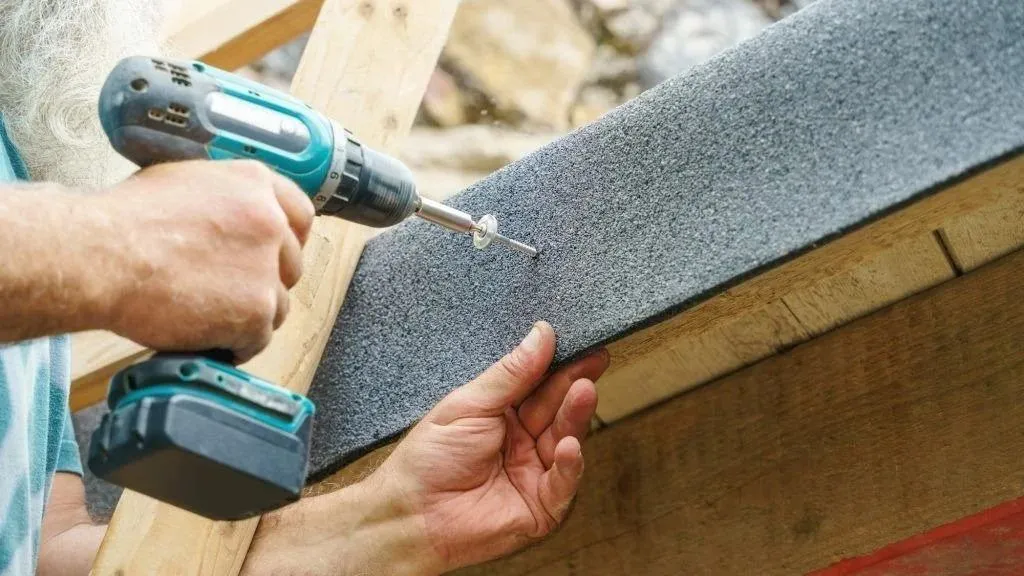
This is where most DIY installs go wrong, and it's the part we get called about. On a shingle or tile roof, every mount is a fastener driven through the roof into the framing. Each one needs a proper flashing kit and the right sealant, set so water sheds over it, not into it. Miss the rafter, skip the flashing, or seal it wrong, and the leak can show up months later as a stain on a ceiling far from the panel.
Florida raises the stakes:
- Wind. Racking has to meet Florida wind-load requirements. A panel that lifts in a storm damages the roof under it and anything it hits.
- Rain. Heavy afternoon storms test every mount and seal most of the summer.
- Tile roofs. Common here, and the hardest to DIY. Tile needs tile-specific mounting hardware and an installer who understands tile flashing, and tiles crack when walked on wrong.
- Roof age. If the roof is within about 5 years of replacement, it should be replaced before solar goes on. Otherwise the panels come off and go back on later at extra cost.
Then there's the climb itself. The U.S. Occupational Safety and Health Administration notes that falls are among the most common causes of serious work-related injuries and deaths, and panels are heavy, awkward and slick.
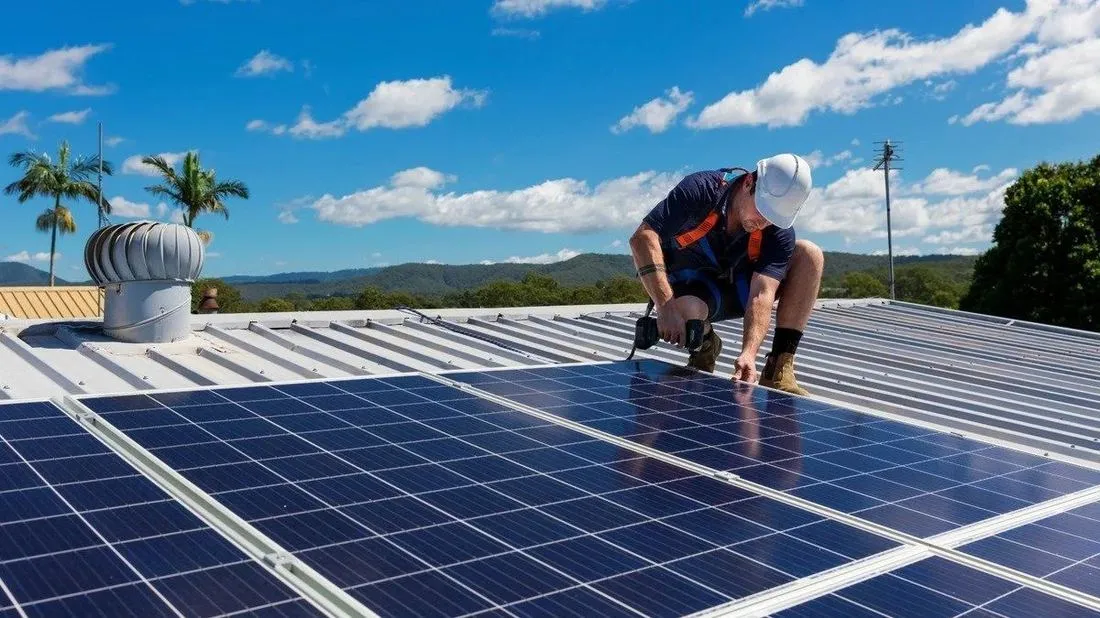
If a mount does leak, our solar panel repair team lifts the panels, replaces the failed flashing, re-seals and re-sets them. It's a fixable problem, but it's cheaper to avoid.
How much DIY really saves
The case for DIY is saving money, so it's worth knowing where the money in a solar system goes. This Old House's solar cost guide (updated June 2026) breaks down a system's total cost like this:
| Cost component | Share of total | Does DIY remove it? |
|---|---|---|
| Soft costs (overhead, customer acquisition, design, profit) | 51% | Partly: you still need a design and engineering |
| Inverter and other system equipment | 19% | No, and DIY buyers often pay retail |
| Solar panels | 18% | No |
| Installation labor | 7% | Yes, minus the licensed electrical work |
| Permits and inspections | 5% | No |
Source: This Old House, "How Much Do Solar Panels Cost?", updated June 12, 2026. National figures.
Labor is the smallest slice after permits, and part of it, the electrical tie-in, still goes to a licensed contractor. What you give up is the installer's warranty on the work, the roofing workmanship warranty on the penetrations, and one company to call when something goes wrong.
DIY vs. professional install
| Part of the job | DIY (owner-builder) | Professional install |
|---|---|---|
| Permit | You apply, sign and are responsible | Handled by the installer |
| Electrical tie-in | Licensed electrical contractor still needed | Included |
| Roof penetrations | Your flashing, your risk | Covered by a workmanship warranty (ours covers every penetration we make) |
| Utility approval | You file the interconnection application | Handled by the installer |
| Equipment and financing | Cash, retail parts | Cash, loan or lease/PPA options |
| Time on the roof | Depends on your experience and help | 1 to 2 days for most homes |
What you can do yourself
The homework is where a homeowner adds real value, and it makes any quote easier to judge:
- Pull 12 months of electric bills. Central Florida use swings between winter and summer, and the system should be sized from a full year.
- Look at your roof. Which faces point south, east or west, what shades them, and how old the roof is.
- Run a free estimate. The DOE's homeowner's guide points to NREL's PVWatts tool for a first production estimate.
- Read your HOA rules and your utility's net metering terms.
- Verify every company's license on the state's DBPR license search.
For what happens after you sign, read how solar panel installation works.
Talk it through before you climb
Our free consultation takes 60 to 90 minutes on site and covers roof condition, shading, structure, your bills, a system recommendation and financing options, and you get an itemized written estimate with no obligation. If the roof should come first, we'll say so. We work across Seminole, Orange, Volusia and Lake counties, including Orlando, Altamonte Springs, Longwood, Apopka and Eustis. Book a free solar consultation.
Questions homeowners ask about DIY solar
Can I install solar panels myself in Florida?
Possibly, as an owner-builder on your own home, but with limits. You sign the permit and a disclosure statement, supervise the work yourself, and still need a building permit, inspection and utility approval. Florida's solar-specific owner-builder rule also requires a licensed electrical contractor to wire the panels, and your building department decides what it will permit.
Can I just plug a solar panel into an outlet?
Not as a way to power your house in Florida. Anything that pushes power into your home's wiring, and through it to the grid, needs a permit and an interconnection agreement with your utility. A small portable panel that charges its own battery or device is a different thing.
How much money does DIY solar save?
Less than most people expect. This Old House's 2026 cost breakdown puts installation labor at about 7% of a system's total cost and permits and inspections at about 5%. Equipment and the other soft costs make up most of the price whoever does the work.
Will installing solar myself affect my roof warranty?
It can. Every mount through a shingle or tile roof is a hole, and roofing warranties don't usually cover leaks caused by someone else's penetrations. Check your roof warranty before anyone drills, and get the roof inspected if it's near the end of its life.
Do I need an electrician for solar panels?
For a grid-tied system, yes. The tie-in to your main electrical panel is licensed electrical work, and Florida's solar owner-builder paragraph specifically requires a licensed electrical contractor to wire the panels and connect them to the house.
What parts of going solar can I do myself?
The research: pull 12 months of electric bills, look at shading and roof orientation, run a free production estimate with NREL's PVWatts tool, check your HOA rules, and verify every installer's license. That homework makes any quote easier to judge.