
Florida Statutes and the Florida Public Service Commission's interconnection rule, linked below. Local permit requirements vary by building department.
A solar panel installation permit is required for every rooftop solar system in Florida. Your city or county building department issues the building permit and inspects the work, and your electric utility separately approves the connection to the grid before the system can be turned on. If you live in an HOA community, the association gets a say in where the panels go, but Florida law doesn't let it say no.
Here's how each of those approvals works, who's allowed to pull the permit, and the rules that catch homeowners out. On our projects, the permits, utility paperwork and final inspections are handled through our installation partners, and we coordinate the roofing side. Our solar panel installation page covers the full project.
In this guide
- Do you need a permit for solar panels in Florida?
- Who can pull a solar permit
- What goes into a solar permit application
- Inspections
- Utility interconnection and net metering
- What your HOA can and can't do
- When the roof needs its own permit
- Permit red flags
- Questions homeowners ask about solar permits
Do you need a permit for solar panels in Florida?
Yes. A rooftop solar system is structural and electrical work on your house: mounts are fastened into the roof framing, racking has to hold through Florida wind loads, and the system ties into your home's electrical panel. That puts it under the Florida Building Code and your local building department's permit and inspection process.
Two approvals have to line up before your panels produce a single kilowatt-hour for you:
- The building permit, issued and inspected by your city or county.
- Utility interconnection, an agreement with your electric utility that lets the system connect to the grid and sets up net metering.
Neither replaces the other. A passed inspection doesn't connect you to the grid, and the utility won't connect a system it hasn't approved.
Who can pull a solar permit
In Florida, the person who pulls the permit takes responsibility for the work. There are two ways to do it.
A licensed contractor
Florida licenses solar contractors specifically. Under s. 489.105, a solar contractor's scope covers installing, altering, repairing, maintaining, relocating or replacing solar panels for photovoltaic systems, pool heating and solar water heating. Electrical contractors also work on solar.
You can look up any Florida contractor license on the state's DBPR license search before you sign anything.
On our solar projects, the electrical work is performed by licensed solar contractor partners under the Powur platform, and Sun State, a Florida state-certified roofing contractor (CCC1334700), handles all roofing-side work and project coordination.
The homeowner, as an owner-builder
Florida's owner-builder exemption, s. 489.103(7), lets an owner act as their own contractor on their own home, with conditions:
- The owner must personally appear and sign the permit application and sign a disclosure statement from the building department before the permit is issued.
- The owner has to directly supervise all work not done by licensed contractors, and can't delegate that supervision to anyone who isn't licensed for the work.
- The home must be for the owner's own use. Selling or leasing it within a year of completion creates a presumption the work was done for sale.
The statute's solar-specific owner-builder paragraph applies only in counties or cities that took part in a federal DOE SunShot rooftop solar grant, and even there the owner must use a licensed electrical contractor to wire the panels and connect them to the house. Ask your building department what it allows before you plan around doing the work yourself.
What goes into a solar permit application
Each building department publishes its own checklist, but a residential solar permit package usually includes:
- A site plan and roof layout showing where the panels go
- An electrical diagram of the system, inverters and the connection to your main panel
- Equipment specification sheets for the panels, inverters and racking
- Roof attachment details and wind-load information for the racking
- Proof the equipment is certified. Under s. 377.705, solar energy systems sold in Florida must meet the Florida Solar Energy Center's standards and display approved test results, or be certified by a Florida-licensed engineer
If the review comes back with corrections, the plans get revised and resubmitted, which is one of the most common reasons a project slips.
Inspections
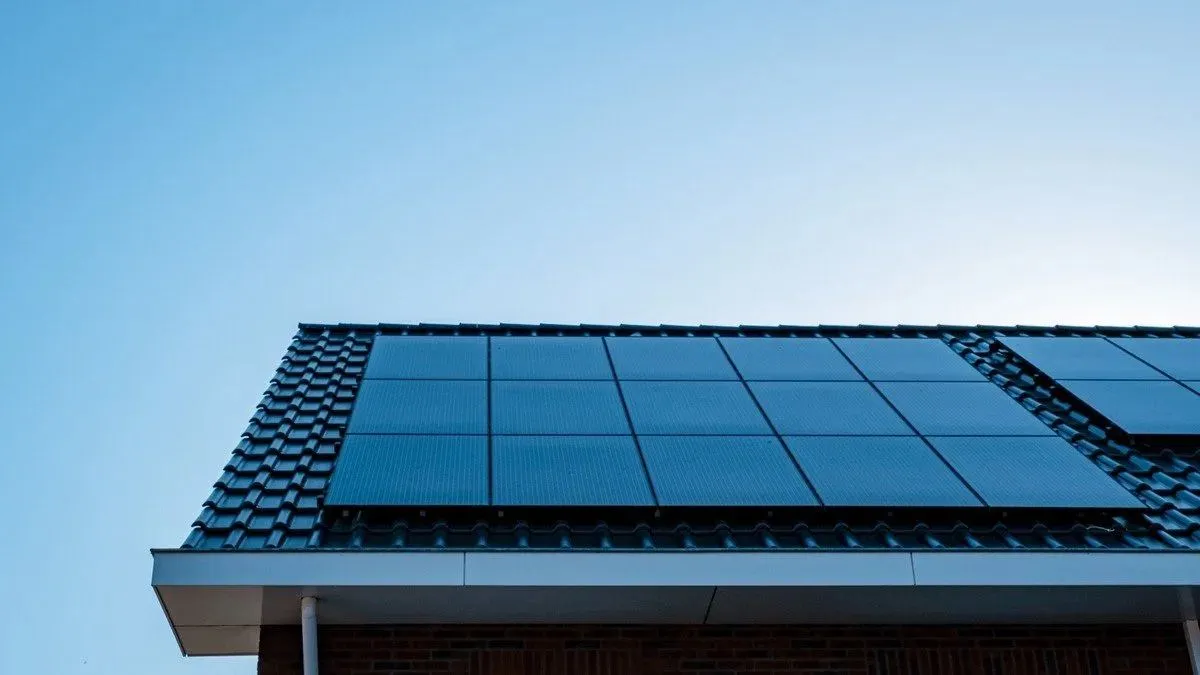
The building department inspects the work after installation, and some departments also do an inspection partway through. Inspectors look at how the system is attached to the roof, how it's wired, and whether what was built matches the approved plans. On our projects, our installation partners coordinate the final inspection and we make sure the roof side is right before anyone climbs up to look.
Utility interconnection and net metering
For investor-owned utilities such as Duke Energy Florida and FPL, the Florida Public Service Commission sets the rules in Rule 25-6.065. Systems fall into three tiers by size:
| Tier | System size | Liability insurance | Application fees |
|---|---|---|---|
| Tier 1 | 10 kW or less | Can't be required (may be recommended) | No extra fees beyond what other customers pay |
| Tier 2 | Over 10 kW up to 100 kW | Up to $1 million general liability | PSC-approved, cost-based fee allowed |
| Tier 3 | Over 100 kW up to 2 MW | Up to $2 million general liability | PSC-approved fee, plus a possible study charge |
Source: Florida Administrative Code Rule 25-6.065. Most home systems are Tier 1 or Tier 2.
The rule also sets the utility's clock. It has 10 business days to confirm an application is complete or flag what's missing, 30 calendar days from a completed application to sign the interconnection agreement, and 30 days after that to finish any physical inspection.
Once you're connected, extra power your system sends to the grid is credited to the next month's bill. Credits roll for up to 12 months, and anything unused at the end of the calendar year is paid out at the utility's as-available energy rate, which is lower than what you pay for power.
Municipal utilities and co-ops are different. OUC in Orlando and other city-owned utilities and electric cooperatives aren't covered by the PSC rule. Under s. 366.91(6), each one has to offer its own standardized interconnection agreement and net metering program, so the details depend on who sends your power bill.
What your HOA can and can't do
Many Central Florida neighborhoods have an HOA, and homeowners often assume the association can refuse solar. It can't. Florida Statute 163.04 says a deed restriction, covenant or similar agreement may not prohibit, or have the effect of prohibiting, solar collectors on a home.
What the HOA can do is decide where on the roof the panels go, within limits: it can only choose among roof faces oriented south or within 45 degrees east or west of due south, and its choice can't impair how well the system works. If a dispute goes to court, the law awards costs and reasonable attorney's fees to the side that wins.
Still submit through your HOA's architectural review if it has one. It keeps the peace with the neighbors, and an approval letter is useful when you sell.
When the roof needs its own permit
If your roof is within about 5 years of needing replacement, we recommend replacing it before the panels go on. That's a separate roofing permit and inspection, and it comes first. Doing the roof and the solar back to back means the new flashing at every mount goes in on a new roof, instead of paying later to take the panels off and put them back. Our roof replacement cost guide covers what that typically runs here.
Already have panels and need a new roof? The panels have to come off and go back on, which means coordinating the solar side and the roofing side under their own permits. That's a job our solar panel repair team handles.
Permit red flags
- "You pull the permit, we'll do the work." An installer asking you to file as an owner-builder so they don't have to is a warning sign. The owner-builder exemption doesn't cover anyone the owner hires to act as a contractor, and you take on the responsibility.
- Panels switched on before utility approval. The system should stay off until the interconnection agreement is signed and the utility says so.
- A license you can't find. Check every company on the DBPR license search.
- Nobody looked at the roof. A permit covers the solar system. It doesn't tell you whether the roof underneath will last as long as the panels.
Getting solar permitted in Central Florida
We work across Seminole, Orange, Volusia and Lake counties, including solar panel installation in Orlando, Sanford, Winter Springs, DeLand and Mount Dora. Each building department and utility has its own process, and our installation partners handle the permitting, interconnection paperwork and final inspections. Start with a free solar consultation, or read how solar panel installation works from start to finish. Our solar panel installation page has the rest.
Questions homeowners ask about solar permits
Do I need a permit to install solar panels in Florida?
Yes. A rooftop solar system needs a building permit from your city or county building department, it has to pass inspection, and your electric utility has to approve the interconnection before the system can be switched on.
Who can pull a solar permit in Florida?
A licensed contractor whose license covers the work, such as a certified solar or electrical contractor, or in some cases the homeowner as an owner-builder. An owner-builder has to sign the permit application and a disclosure statement and personally supervise the work, and can't hand that role to an unlicensed installer.
Can my HOA stop me from installing solar panels?
No. Florida Statute 163.04 says a deed restriction or HOA rule can't prohibit solar collectors. The association can decide where panels go, but only among roof faces oriented south or within 45 degrees east or west of due south, and only if its choice doesn't impair the system's performance.
How long does it take to get a solar permit?
It depends on your building department and how complete the application is. On our projects, permitting and utility interconnection together typically add 4 to 8 weeks to the total project time.
Do I need extra insurance to connect solar to the grid?
Not for most homes. Under Florida PSC Rule 25-6.065, investor-owned utilities can't require liability insurance for systems of 10 kW or less, though they may recommend it. Systems over 10 kW and up to 100 kW can be required to carry up to $1 million in general liability coverage.
What happens if solar panels are installed without a permit?
The utility won't approve an interconnection it hasn't signed off on, and unpermitted work can come back up when you sell the house or file an insurance claim. Fixing it after the fact usually means permitting and inspecting the system as built.